Repainting Faded Exterior Trim and Fascia in the Arizona Sun
The body of a house can still look fine while the trim, fascia, and eaves have chalked and faded. Here is why trim fails first in the Arizona sun and how to repaint it so the whole exterior looks sharp again.
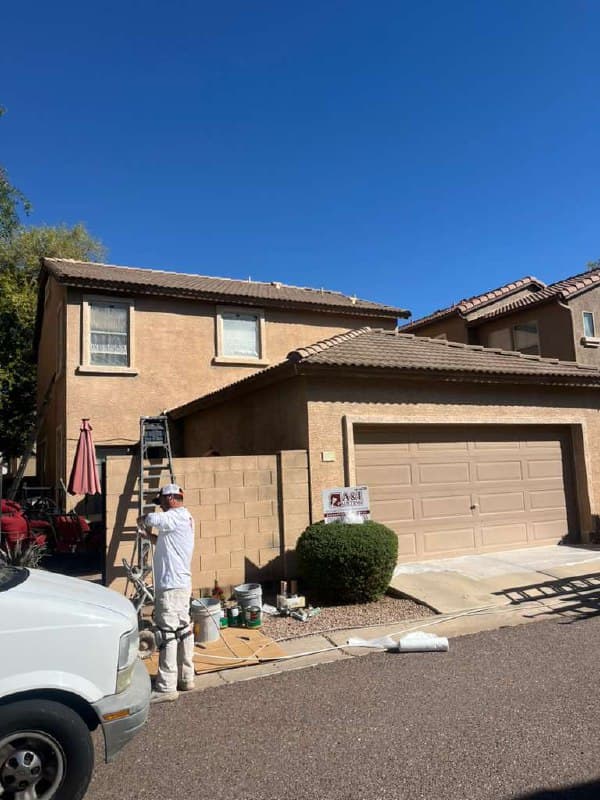
On a lot of Tempe homes, the body of the house still looks presentable while the trim, fascia, and eaves have gone dull, chalky, and faded. It is a common pattern in the desert, and it happens because those trim elements take a different kind of beating than the main walls. Fascia boards and eaves sit up high in relentless direct sun, window and door trim frames the surfaces that get touched and weathered most, and all of it is usually a crisper, often lighter color that shows fading sooner. The result is a house whose overall shape reads fine from the curb but whose edges look tired up close — and repainting just the trim and fascia is often what brings the whole exterior back to sharp without repainting the entire home.
Understanding why trim fails first helps explain why it is worth addressing on its own. The Arizona sun is punishing, and the ultraviolet exposure that fades and chalks paint hits high, unshaded surfaces like fascia and eaves the hardest. Trim also tends to be painted in a contrasting color that makes any fading obvious, and the sharp, detailed edges of trim show wear — cracking, peeling, chalking — more visibly than a broad flat wall does. So even when the body paint is holding up, the trim can be several years' worth of sun damage ahead of it, which is exactly why a trim-and-fascia repaint can deliver an outsized improvement.
Chalking is the specific problem to deal with before repainting, and it cannot be skipped. Faded desert trim often develops a chalky surface — a powdery residue as the old paint breaks down under UV — and new paint will not bond to it. The surface has to be washed and the chalk removed so the new coat grips clean, because painting over a chalky fascia board just means the fresh paint peels off with the old residue underneath. Alongside that, any peeling has to be scraped, bare wood or cracked areas primed, and gaps caulked, so the trim gives the new paint a sound surface to hold onto.
Fascia and eaves also deserve a look at the wood itself while the work is happening, because they are where sun and the occasional monsoon moisture do structural damage. High trim boards that have been baking and weathering for years can develop soft spots, splits, or rot at the ends and seams, and a repaint is the natural time to catch and address that. Priming bare and repaired wood before the finish coat seals it against the next round of sun and weather, so the paint is protecting sound material rather than just hiding a problem that will keep spreading.
The product and color choices are what make the refreshed trim last. A quality exterior paint in a satin or semi-gloss finish suits trim and fascia well — the tighter finish resists the chalking that flat paint succumbs to faster, sheds the occasional rain, and gives the crisp, clean look that trim is supposed to provide against the body of the house. Matching or intentionally updating the trim color against the existing body color is what ties the exterior together, and because trim is a small share of the total surface, it is an area where using a durable product is easy to justify for how much longer it holds up.
Repainting the trim and fascia is frequently the highest-impact exterior work a Tempe homeowner can do short of a full repaint. When the body is sound but the edges have chalked and faded, cleaning off the chalk, scraping and priming the bad spots, addressing any sun-damaged wood, and recoating with a durable satin or semi-gloss brings the whole exterior back into focus. The house stops looking tired at its edges, the crisp lines return, and the curb appeal is restored — all by treating the surfaces the desert sun wears out first as their own worthwhile project.
Need a painting estimate?
A&I Painting helps Arizona homes and businesses with interior painting, exterior painting, epoxy flooring, and cabinet refinishing.