Painting Tall Stairwells and Two-Story Entries in Mesa Homes
Tall walls and angled stairwells need more than an extension pole. Learn how access, lighting, repairs, and cut lines shape a safe, consistent interior repaint.
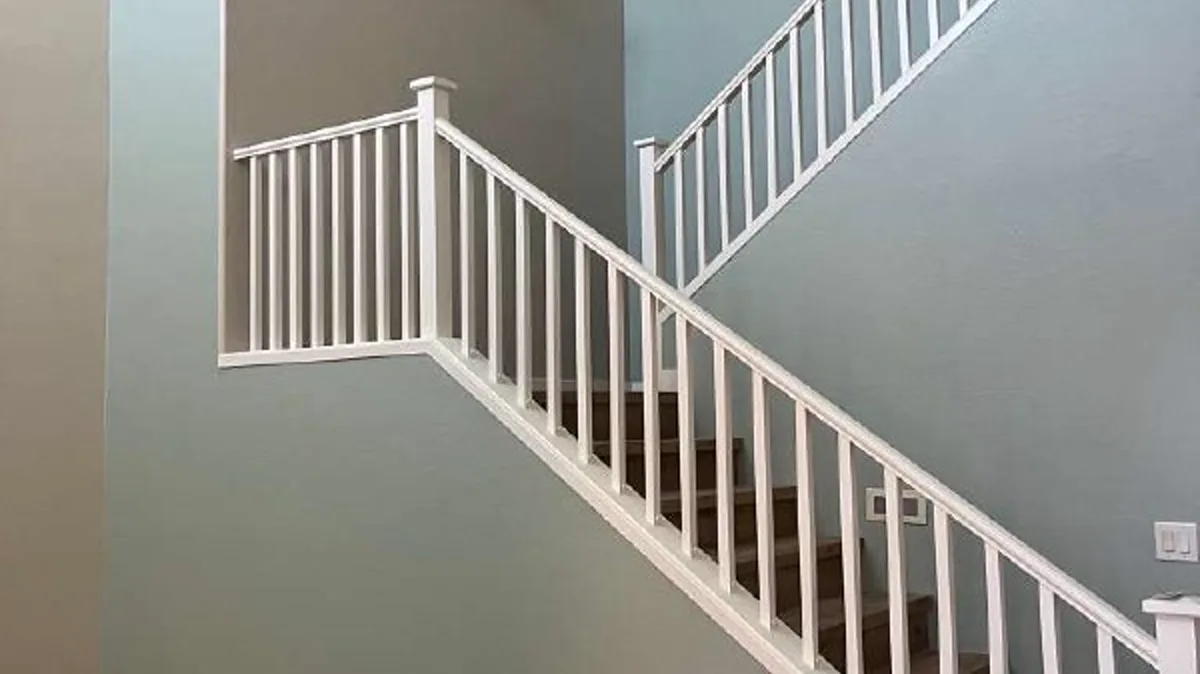
A tall stairwell or two-story entry can be the largest continuous painted surface in a home, which means small defects are easy to see. Uneven roller coverage, a wandering ceiling line, or an unrepaired crack may be visible from both floors. In Mesa homes, strong daylight from high windows can make those flaws even more noticeable. Repainting these areas successfully requires a plan for safe access, consistent preparation, and a finish that looks uniform from every viewing angle.
Access is the first challenge. Standard ladders may not sit safely on steps, and leaning too far to reach an upper corner creates unnecessary risk. Professional crews select ladders, adjustable platforms, or scaffolding that can be leveled for the stair configuration. The setup also has to protect railings, floors, and nearby walls without blocking a required exit. Good access lets the painter work with control instead of stretching, rushing, or leaving difficult sections unfinished.
Preparation matters because tall walls often hide cracks near ceiling lines, drywall seams, vents, and upper windows. The surface should be inspected from the working platform, not only from the floor. Nail pops, settlement cracks, damaged corner bead, and old patch edges need to be repaired and sanded smooth. Dust and cobwebs collect in high corners, while handrails and lower walls may have oils or scuffs that require cleaning before primer or paint is applied.
Lighting changes how the color and sheen appear. A two-story entry may receive intense daylight at the top and shade near the stairs, making the same color look different across one wall. Testing a sample in both conditions helps prevent surprises. Flat or matte finishes can soften minor surface variation, while higher sheens reflect more light and reveal repairs. The right finish also depends on how much contact and cleaning the lower portion of the stairwell receives.
Application technique keeps the large surface visually consistent. Upper and lower sections should be planned so wet edges can be maintained, reducing lap marks and visible bands. Ceiling lines, trim, and angled stair details need clean cuts before broad rolling begins. Paint should be mixed consistently, especially when multiple containers are used. Adequate drying time between coats is essential even when the upper walls appear dry quickly in Arizona's warm, low-humidity conditions.
A&I Painting provides interior painting for homeowners in Mesa and the surrounding Arizona communities. If a stairwell, vaulted room, or two-story entry needs fresh color, a professional evaluation can determine the safest access plan and identify repairs that are difficult to see from below. Careful setup and consistent application produce a cleaner finish while protecting the stairs, railings, floors, and adjoining rooms throughout the project.
Need a painting estimate?
A&I Painting helps Arizona homes and businesses with interior painting, exterior painting, epoxy flooring, and cabinet refinishing.