Painting a Backyard Block Wall in Arizona So It Actually Holds Up to the Heat
A painted block wall can transform an Arizona backyard, but concrete block and the desert sun punish the wrong coating fast. Here is how to prep and paint a CMU wall so the color lasts and the finish doesn't peel or effloresce.
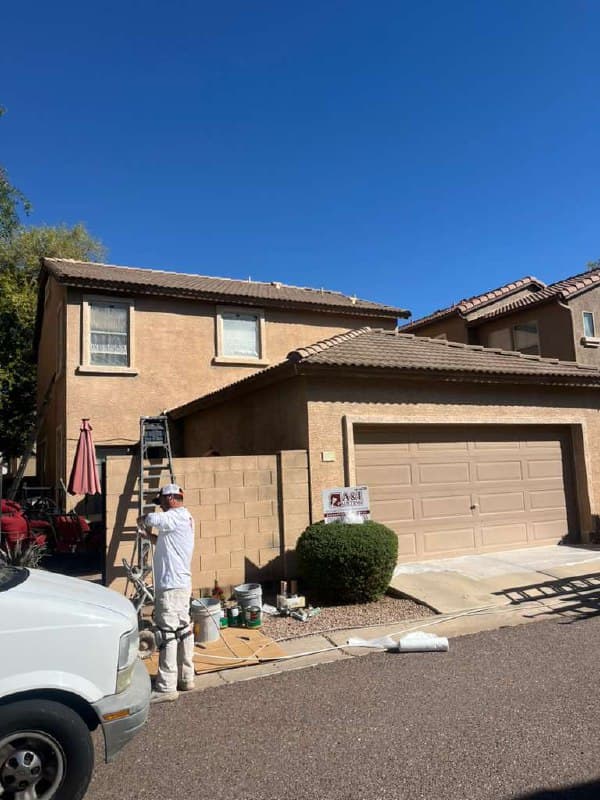
The concrete block perimeter wall is a defining feature of almost every Arizona backyard, and a coat of paint can transform one from a raw gray barrier into a finished backdrop that ties the whole yard together. But concrete block — CMU, in the trade — is a demanding surface, and paired with the desert sun it punishes a careless paint job fast. Block is porous, alkaline, and prone to pushing moisture and mineral salts to its surface, and the relentless heat and thermal cycling work on any coating applied over it. Painting a block wall so the color actually lasts is a specific job with specific rules, not a matter of rolling on whatever exterior paint is handy.
The first thing to understand about painting block is efflorescence, because it is the most common cause of a block-wall paint job failing. Efflorescence is the white, chalky, crystalline deposit that forms when moisture moving through the block carries dissolved mineral salts to the surface and leaves them behind as the water evaporates. Paint will not bond over efflorescence — it sits on top of loose crystals and peels — so any existing deposits have to be removed before painting, typically by dry brushing and, where needed, a masonry cleaner, and the source of the moisture understood. Painting a block wall that is actively efflorescing without addressing it is painting a failure into the job.
Alkalinity is the block's other challenge, and it drives the primer choice. Fresh or bare concrete block is highly alkaline, and that alkalinity can attack and break down an ordinary paint applied directly over it, causing burning, discoloration, and adhesion loss. The answer is a masonry primer — an alkali-resistant block filler or masonry sealer — that both stands up to the alkalinity and fills the porous, pitted surface of the block so the topcoat goes on evenly. That block-fill primer step is what turns a rough, thirsty, chemically hostile surface into a sound, uniform base ready to hold color. Skipping it is why bare block painted with wall paint alone tends to look blotchy and let go early.
The topcoat for an Arizona block wall wants to do two things: bridge the surface and survive the sun. Elastomeric masonry coatings are a popular choice here because they are thick, flexible films that stretch to bridge the hairline cracks block develops and seal the surface against water intrusion, while standing up to UV. A quality acrylic masonry paint is the other route. Either way, the coating needs to be rated for masonry and for exterior desert exposure, because an interior-grade or bargain paint will chalk, fade, and fail on a sun-blasted block wall in short order. Two full coats build the film thickness the UV resistance and crack-bridging depend on.
Color choice on a block wall follows the same desert logic as any Arizona exterior, and it matters more on a large sunlit expanse. A long block wall in full sun takes an enormous heat load, and a dark color both runs far hotter and fades harder under the UV than a light one. Lighter sands, tans, and warm neutrals reflect more of the sun, run cooler, put less thermal stress on the coating, and hold their color longer — which is why most painted block walls in the desert stay in that lighter range. A homeowner set on a deeper color should expect it to fade sooner and consider a heat-reflective formulation to soften the penalty.
Prep beyond efflorescence rounds out the job. The wall has to be clean — pressure washing off dirt, chalk from any old coating, and organic growth — cracks and damaged block repaired with the right patching product, and the whole surface sound and dry before priming. Any old failing paint has to come off back to a sound surface, because a new coating is only as good as what it is bonded to. And the moisture question has to be answered: if water is consistently getting into the wall from irrigation, grade, or a sprinkler hitting it, that source needs fixing, because a block wall that stays wet will push any coating off from behind no matter how good the products are.
Timing follows every Arizona exterior rule, and block adds its own wrinkle. The wall's surface runs far hotter than the air in direct sun, so the work moves with the shade and the cooler hours rather than coating a block wall baking at midday, which would flash the coating off before it can bond. The monsoon's rain and humidity threaten a fresh masonry coat's cure, so the job watches the weather and leaves margin. And because masonry coatings are often thick, each coat needs its full cure time before the next — rushing a heavy elastomeric recoat traps moisture and blisters. Patience with surface temperature and cure times is what lets the finish set up properly.
In short, painting an Arizona backyard block wall to last means removing and addressing efflorescence, priming the alkaline, porous surface with a masonry block-fill primer, topcoating with a UV-tough masonry or elastomeric paint in a heat-smart light color, doing the cleaning and crack repair that give the coating a sound base, and timing the work around the surface heat and the monsoon. Done that way, a raw gray perimeter wall becomes a finished, durable backdrop that holds its color and integrity through the desert seasons — instead of a peeling, chalking, efflorescing wall that needed doing over the following summer.
Need a painting estimate?
A&I Painting helps Arizona homes and businesses with interior painting, exterior painting, epoxy flooring, and cabinet refinishing.