Light-Reflective Exterior Colors That Keep an Arizona Home Cooler
The color on your walls does more than set the curb appeal in Arizona — it decides how much of the desert sun the house absorbs. Here is how light-reflective exterior colors lower wall temperatures, ease the cooling load, and help the paint itself last longer.
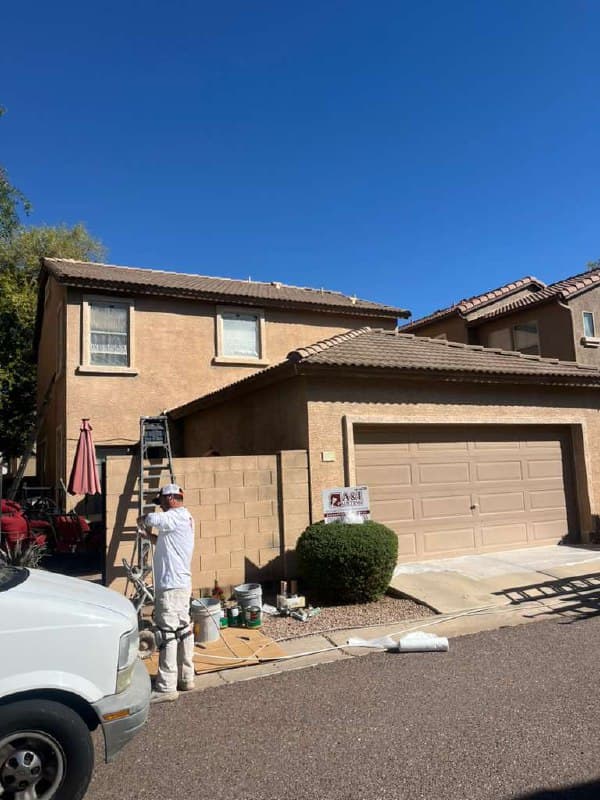
In most of the country, exterior color is a question of taste and curb appeal. In Arizona, it is also a question of how much of the desert sun your house drinks in. The walls of a home facing the relentless Phoenix-area sun absorb an enormous amount of solar energy, and the color of those walls is one of the biggest factors in how hot they get. A dark exterior can run dozens of degrees hotter than a light one in direct sun, and that heat does not stop at the wall — it radiates inward, loads the air conditioning, and bakes the finish itself. Choosing a light-reflective color is one of the simplest decisions a homeowner can make to keep a desert home cooler and its paint lasting longer.
The physics behind it is straightforward: light colors reflect solar energy, dark colors absorb it. A white or very light wall bounces a large share of the sunlight that hits it back into the air, while a dark wall absorbs that energy and converts it to heat. In a climate where a sun-facing stucco wall can already reach 140 to 160 degrees, the color choice can swing the surface temperature substantially — light walls stay markedly cooler to the touch than dark ones under the same sun. That temperature difference is exactly why the traditional desert and Mediterranean homes of the Southwest have always leaned toward whites, sands, and pale earth tones rather than deep, heat-soaking colors.
The useful number to know when choosing a color is its LRV, or Light Reflectance Value, which most paint manufacturers publish for every color. LRV runs from 0 for absolute black to 100 for pure white, and it tells you how much visible light a color reflects. For a hot, sun-exposed Arizona exterior, higher LRV colors reflect more energy and stay cooler, while low-LRV colors absorb more and run hot. A useful habit when comparing exterior colors in the desert is to look up the LRV and lean toward the higher end for the main field of the house — a difference of twenty or thirty points of LRV translates to a real difference in how much heat the wall takes on.
Beyond visible light, the more complete measure is solar reflectance, because a meaningful share of the sun's energy arrives as invisible infrared. Some exterior paints are formulated specifically as heat-reflective or 'cool' coatings, using pigments engineered to reflect infrared energy even in deeper colors. These cool-wall and cool-roof technologies let a homeowner who wants a richer color get some of the heat-reflecting benefit of a lighter one, by reflecting the infrared the eye cannot see. For anyone set on a mid-tone or deeper exterior in the desert, asking specifically for a heat-reflective or infrared-reflective formulation is the way to soften the heat penalty that the color would otherwise carry.
That said, the most reliable cooling comes from genuinely light colors, and the desert palette is broad enough that lightness is not a limitation. Warm whites, creams, soft sands, pale tans, light greiges, and gentle desert pastels all carry high reflectance while looking right at home against the Arizona landscape — they read as intentional and regional rather than stark. The off-whites and warm neutrals that dominate Southwestern architecture earned their place partly because they keep the houses cooler. A homeowner can have a sophisticated, current exterior color and a cool wall at the same time by staying in the lighter, warmer end of the range for the main body of the house.
The common move is to balance a light, reflective main color with darker accents placed where the heat penalty does not matter much. The large sun-facing field of the walls is where lightness pays off most, so that is where the high-LRV color belongs. Deeper, richer colors can then be used in small, lower-impact areas — the front door, shutters, a small accent wall, trim details, or shaded recesses — where the surface area is small and the heat gain is negligible. This gives a home depth and contrast and a designed look while keeping the broad, sun-blasted expanses light and cool. It is the best of both: character from the accents, cooler walls from the field.
Cooler walls also mean a longer-lasting finish, which is a benefit beyond comfort and energy bills. Heat is one of the main forces that degrades exterior paint in the desert — the relentless thermal load and the expansion-and-contraction cycling break down the film, fade the color, and drive the cracking that opens stucco to water. A lighter color that runs cooler puts less thermal stress on the coating and on the wall behind it, so the paint holds its color and integrity longer than a dark color baking in the same sun would. Dark exteriors in Arizona not only run hotter but tend to fade and need refreshing sooner, compounding the case for a lighter field.
The practical takeaway for an Arizona homeowner choosing an exterior color: treat lightness as a performance feature, not just a style, especially on the walls that face the sun. Check the LRV and favor the higher end for the main body of the house, consider a heat-reflective formulation if a deeper color is a must, save the dark accents for the small areas where heat gain does not matter, and keep the broad sun-facing fields in the warm whites, sands, and pale neutrals that the desert has always favored. The reward is a house that stays cooler, leans less on its air conditioning through the brutal summer, and holds its finish years longer against the sun that drives every other exterior decision out here.
Need a painting estimate?
A&I Painting helps Arizona homes and businesses with interior painting, exterior painting, epoxy flooring, and cabinet refinishing.